






When Should You Winterize Your Sprinklers in Regina?
Every fall we get the same phone call. It's the second week of October, there's frost on the grass, and someone wants to know if they still have time to winterize their sprinklers in Regina before things freeze up.
Usually the answer is yes. Sometimes it's barely.
So let's sort out the timing question properly, because picking the right week is most of the battle here. Go too early and you shortchange your lawn heading into winter. Go too late and you're rolling dice with the freeze.
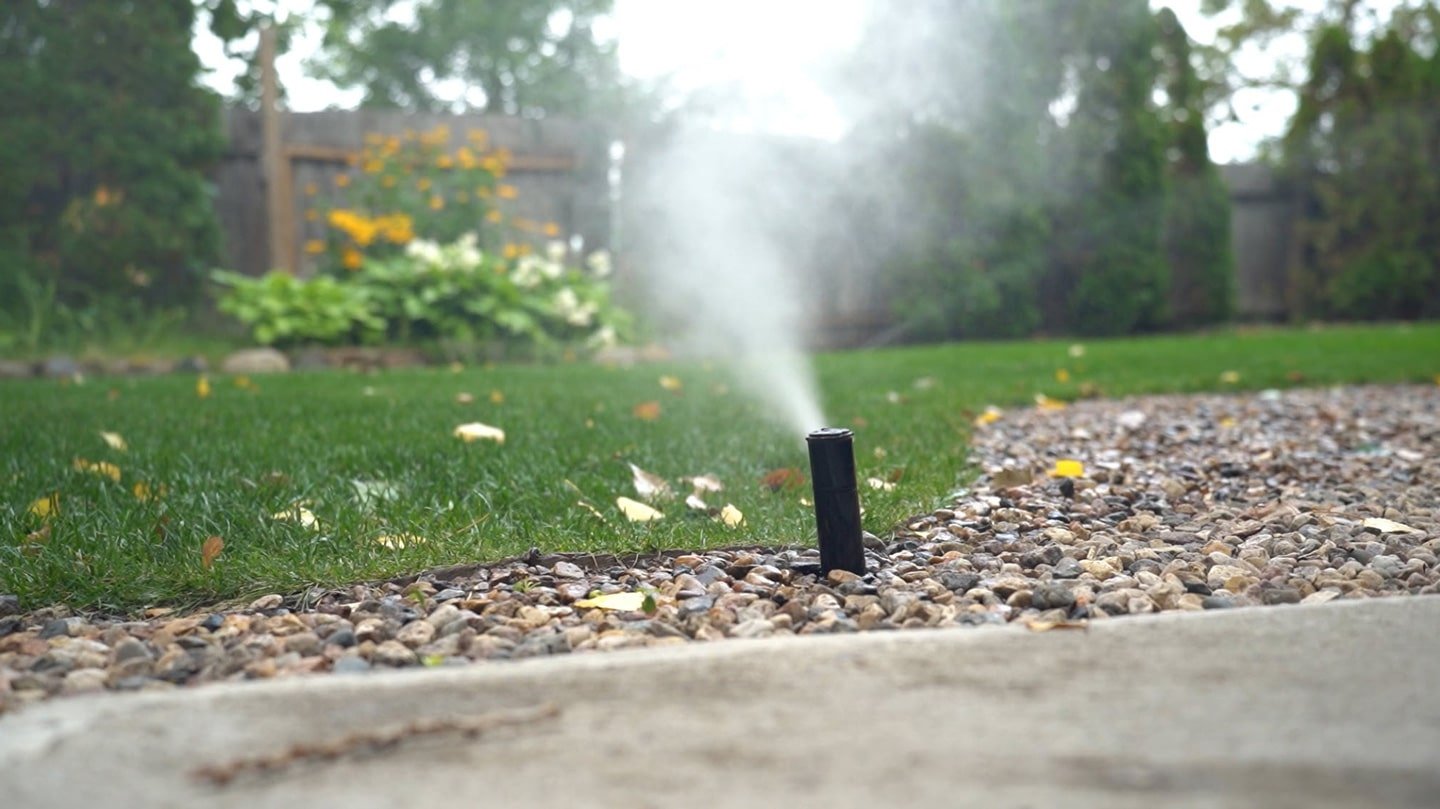
The short answer on timing
Late September through mid-October. That's your window in Regina.
If you want a rule of thumb: aim to have the system cleared by around the second week of October. Some years you could push it later and get away with it. Some years you can't, and there's no way to know which kind of year it is until it's already too late to matter.
Why the timing question is tricky here
Regina's average first fall frost is September 17, according to Environment and Climate Change Canada's 1991–2020 climate normals from Regina International Airport. Rural properties outside the city can see frost earlier than Regina itself.
Here's the confusing part though. A light frost isn't the thing that wrecks your system. A light overnight frost barely touches water sitting a foot underground. What matters is the first sustained hard freeze, when overnight lows sit well below zero for a few nights running and the frost starts working its way into the ground.
That usually shows up a few weeks after the first frost date. Which is why "wait until the first frost" is bad advice, and "shut it down Labour Day weekend" is also bad advice.
The other thing working against you is how our falls behave. Regina can stay mild well into October and then turn cold quickly, which is why waiting on the weather is risky.
How to pick your actual date
Keep watering while the weather's warm. Your lawn and especially your trees are still drinking in September, and cutting them off early going into a dry Saskatchewan winter doesn't do them any favours.
Then watch the ten-day forecast starting late September. Once you see overnight lows heading toward the freezing mark on more than the odd night, that's your cue.
One thing worth planning around: everybody's window is the same window. Most irrigation companies are working through the same short window, and compressors and crews get booked out fast. Calling in the first week of October often means waiting.
Getting on the schedule in early or mid-September is the easy way around that. You still get serviced at the right time, you just get to pick the date instead of taking whatever's left. You can book a sprinkler blowout with Weed Pro and lock in a window that works for you.
What happens if you leave it too late
Water expands roughly 9% when it freezes. Inside a sealed pipe or a valve body, that expansion has nowhere to go, so something has to give.
What gives is usually a poly line, a valve, a fitting, or a head. And here's the annoying part: you don't find out in November. You find out in May when you fire the system up and one zone won't hold pressure, or water's coming up through the lawn somewhere it shouldn't be. Then you're paying someone to dig, locate the break, and fix it during the busiest month of the season.
The backflow preventer deserves its own mention. It sits above ground, it holds water, and its body doesn't survive a freeze well. It's also typically the most expensive single component on a residential system, and a freeze-damaged one can cost hundreds of dollars to repair or replace. That's the part where skipping a blowout stops being a small gamble.
What a proper blowout actually involves
The concept is simple. Shut off the water supply, then push compressed air through the system zone by zone to force the water out through the heads.
Doing it right is fussier than it sounds.
Pressure has to stay in the right range. Colorado State University Extension puts the working range at 40 to 80 PSI, with 80 PSI as the maximum for rigid PVC and 50 PSI for the flexible black poly pipe common in a lot of Regina yards. Too much pressure or too much air velocity can heat and damage the pipe and fittings you were trying to protect.
Volume matters more than pressure, and it's where most DIY attempts fall apart. Air has to move in enough volume to actually push the water out ahead of it. Colorado State University Extension describes what happens when there isn't enough: the air rides over the top of the water instead of moving it, and the remaining water drains back into the low spots, right where it can freeze. The system looks winterized. It isn't.
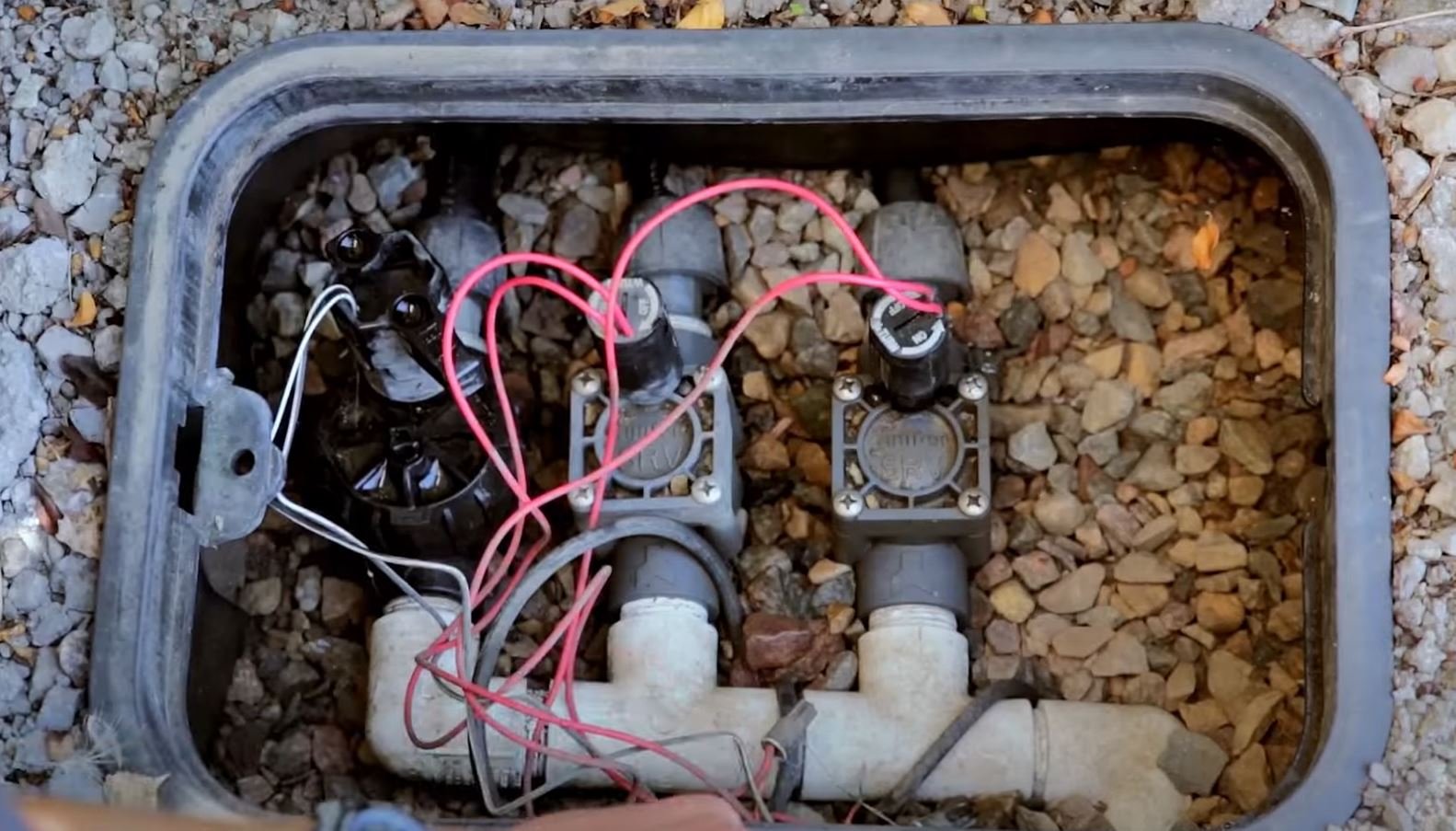
The backflow assembly gets handled separately, not by blowing air through it. Hunter Industries specifically advises against running compressed air through a backflow device. It gets isolated and drained through its own valves and test cocks, and the air goes into the system downstream of it. Getting that order wrong is one of the ways a DIY blowout damages the exact part you were trying to save.
There's a safety piece too. Hunter's guidance calls for ANSI-approved eye protection during a blowout, because compressed air can send debris flying and cause serious injury. It also notes this is a job best handled by a qualified contractor.
If you're weighing whether to tackle it yourself, we went deeper on that tradeoff in our post on DIY vs. professional sprinkler blowouts.
Serving Regina and the surrounding towns
We handle blowouts across Regina and out into White City, Emerald Park, Pilot Butte, Balgonie, Lumsden, and Grand Coulee.
If you're outside the city, don't assume you've got extra time. Rural and acreage properties around here tend to run colder and freeze earlier than the city core, so if anything you want to be a bit ahead of your Regina neighbours, not behind them.
Mistakes we run into every fall
Draining it manually and calling it finished. Gravity doesn't clear the low spots in your lines. Water stays behind in exactly the places you can't see.
Shutting off the water and stopping there. Closing the supply valve doesn't remove what's already in the pipes. It just stops more from going in.
Ignoring the backflow preventer. Easily the most expensive thing to get wrong.
Waiting for a sign. By the time the weather makes it obvious, the schedule is full and the forecast isn't on your side.
Turning the system back on afterward. Once it's cleared, leave the supply off and set the controller to off or rain mode so it can't kick on and refill the lines during a cold snap.
Get it on the calendar
The freeze date isn't negotiable and it doesn't send a reminder. Winterizing on time is a small, boring, once-a-year job that quietly prevents the kind of repair bill nobody budgets for.
If you haven't picked your date yet, now's a good time. Get in touch with Weed Pro for current pricing on your property and we'll get you scheduled before the cold shows up.
FAQ
When should I winterize my sprinklers in Regina?
Late September through mid-October, with the goal of being done by around the second week of October. Regina's average first fall frost is September 17 and rural areas freeze earlier, so don't wait for the weather to make the decision for you.
Is the first frost the deadline?
Not exactly. A light frost usually won't damage a system. The real deadline is the first sustained hard freeze, which typically follows a few weeks later. The problem is you can't predict which night that'll be, so building in a buffer is the safer play.
How much does a sprinkler blowout cost?
It depends on the property, the number of zones, and the setup. Reach out and we'll give you current pricing for your system.
What happens if I skip winterization entirely?
Water left in the system freezes and expands, which can crack pipes, split valves, break heads, and damage the backflow preventer. You generally won't discover the damage until spring startup, and the repairs cost considerably more than the blowout.
Can I just drain the system myself?
Draining by hand won't clear the low spots in your lines, and a standard home compressor doesn't move enough air volume to push the water out properly. Both approaches tend to leave water exactly where you don't want it.
What do I do after the blowout?
Leave the water supply shut off and set your controller to off or rain mode so the system can't run and refill. Then leave it until spring startup.